
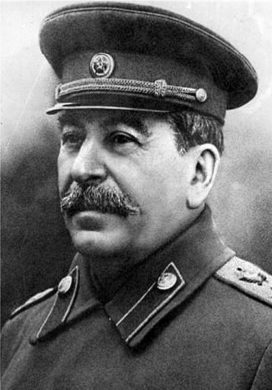
Joseph Stalin Biography
Ruthless and ambitious, Joseph Stalin grabbed control of the Soviet Union after the death of V.I. Lenin in 1924 and held it until his own death in 1953. Today he is remembered for this brutal, bloodthirsty, power-at-all-costs ways.
As a member of the Bolshevik party, Joseph Stalin (his adopted name, meaning “Man of Steel”) had an active role in Russia’s October Revolution in 1917. He maneuvered his way up the Communist Party hierarchy, and in 1922 was named General Secretary of the Central Committee. By the end of the 1920s, Joseph Stalin had expelled his rival Leon Trotsky, consolidated power, and was the de facto dictator of the Soviet Union.
In the 1930s Stalin executed his political enemies and started aggressive industrial and agricultural programs that were supposed to lead to miraculous improvements in production, but instead left millions of peasants dead. During World War II, Joseph Stalin was the commander of the Soviet military, first making a non-aggression pact with Adolf Hitler (1939) but then joining the Allies after Germany invaded Russia in 1941.
Stalin attended the postwar conferences at Yalta, Teheran and Potsdam that determined the shape of the postwar world. He endured as maximum leader until his death in 1953; years later he was denounced by his successor, Nikita Khrushchev, and “Stalinism” was officially condemned.
Related Biographies
Something in Common with Joseph Stalin
4 Good Links
- The World History Project lays out his lifetime
- Detailed biography from RT.com, the state-controlled Russian news network
- 2010 story recounts the horrors shown by newly-released documents
- A good quick look at Stalin's role in WWII, from a much larger Harvard site about the Cold War