
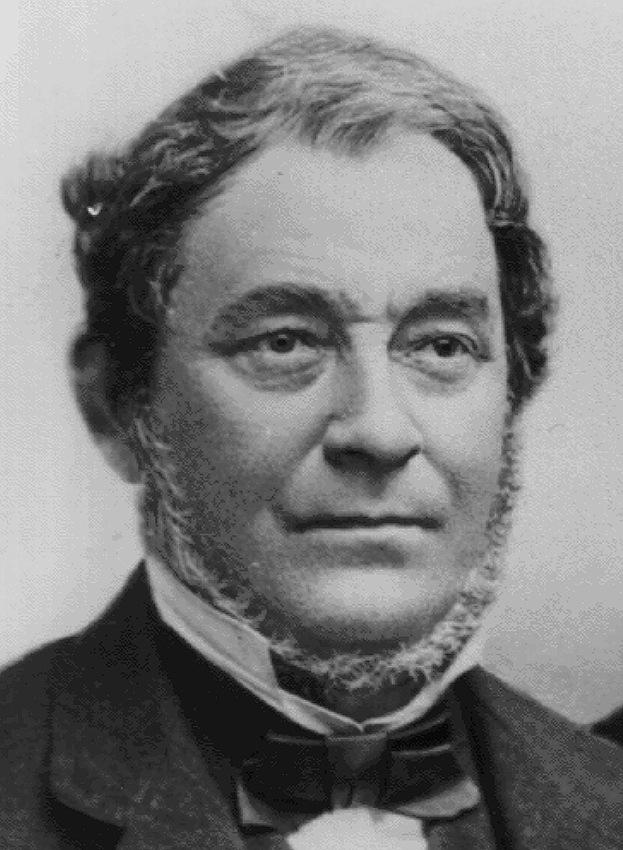
Facts about Robert Bunsen
Robert Bunsen Biography
Robert Wilhelm Bunsen did groundbreaking work in organic chemistry and spectrometry, but he’s more famous for the laboratory gas burner that bears his name.
Robert Bunsen was an extraordinary experimentalist and popular university teacher who made a name for himself in the 1830s with experiments using organic arsenic compounds.
Those experiments nearly cost him his life — an explosion caused the loss of sight in one eye and a bad case of arsenic poisoning, and he later forbade organic chemistry experiments in his lab.
He taught for many years at the University of Marsburg (1838-51), but is most closely associated with the University of Heidelberg, where he worked from 1852 until his retirement in 1889.
Robert Bunsen invented many lab tools, including a grease-spot photometer, a galvanic battery and an ice calorimeter, and, with Gustav Robert Kirchhoff, a spectrometer (1859) that led to his discovery of the elements cesium and rubidium.
Around 1855 he had university mechanic Peter Desaga build a gas burner that would produce a steady and near-colorless flame for lab experiments (Michael Faraday had used a similar burner). The result, known as a Bunsen burner, remains a common lab tool to this day.
Extra credit
Robert Bunsen had a lifelong interest in geology, and in the 1840s he proved experimentally how geysers work… Robert Bunsen, like John Dalton, was a bachelor his entire life.