
Authors Who Wrote Themselves to Death
Getting that last big book out has driven a few celebrated authors straight into the grave. Here are some famous people who wrote right to the bitter end.
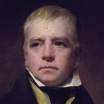
SIR WALTER SCOTT: Terrifically popular in his day, Scott decided he should make money as the publisher as well as author of his own works. With that in mind he went into partnership with printer John Ballantyne and then with the publisher Archibald Constable. When Constable and Company went bankrupt after the great financial crash of 1825, Scott found himself in debt for over 100,000 pounds. It was a gigantic sum in those days, the equivalent of perhaps US$8,000,000 today.
A man of great pride, Scott refused the aid of friends and set out at age 55 to pay off the debt by writing. Between 1826 and 1830 he worked at a tremendous pace, completing (among other stories) three books in his Waverly series, two books of Scottish history, plus a life of Napoleon Bonaparte. He managed to pay off one-third of the debt before the exertion brought on a stroke. Scott was never the same and died two years later. Yet he finally reached his goal: after his death, the sale of rights to his stories brought in enough cash to pay off all his debts.
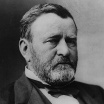
ULYSSES S. GRANT: The great Civil War general also went broke late in life, thanks to an ill-advised investment in the Wall Street firm of Grant and Ward. (His son, Ulysses Jr., was a partner.) The firm went bankrupt, leaving Grant and his family deeply in debt. Grant determined to raise cash by writing his memoirs, a task which became more urgent when it became clear he had terminal cancer of the throat. Despite debilitating pain, Grant completed his memoirs in July of 1885 and died a few days later. The memoirs were published posthumously and were a great success, paying off all of Grant’s debts and setting up his widow Julia for the rest of her life.
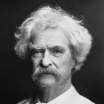
MARK TWAIN: Oddly, the famous author played his own part in Ulysses S. Grant’s memoirs. Grant’s publisher was Charles L. Webster and Company, and Twain was a partner in that firm; like Scott, he had found publishing too lucrative to resist. Grant’s memoirs were Webster’s only great success, and the company went bankrupt ten years later. In an article on July 12, 1895, the New York Times reported that Mark Twain “had lost all of his money trying to keep the firm solvent, and that in its failure he had lost everything.” Twain, like Scott, vowed to pay off his debt in full. At age 60 he began a exhausting world lecture tour, travelling across America and on to Australia and Europe. By 1898 he had raised enough money to pay his debts dollar for dollar. Twain lived until 1910, but the strain of the bankruptcy (combined with the death of his wife, Olivia, in 1904) contributed to his rather gloomy outlook in the last decade of his life.
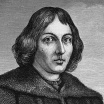
NICOLAS COPERNICUS: For more than 30 years, this Polish mathematician observed the skies and worked on his theory of planetary motion. He believed that the accepted geocentric theory, first conceived by Ptolemy nearly 1,500 years before, was just plain wrong, and that the planets — including our own — moved around the sun.
Copernicus was hesitant to publish his theories for fear of antagonizing the Catholic church, so it wasn’t until 1543, at the urging of the mathematician Rheticus (Georg Joachim von Lauchen), that his work De revolutionibus orbium coelestium was published. He died that same year. For years it was thought that Copernicus was on his deathbed before he could see the first copy, but now it is believed that the book was published a few weeks before his death, so it’s likely he saw it then. Even so, it’s clear that he died before the impact of his work could be fully appreciated.
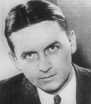
ELIOT NESS: He wasn’t an author, but Eliot Ness’s book The Untouchables made him famous all over again when it was published in 1957, a few months after his death. Ness had already been in a bright spotlight in the 1930s as a fiery federal agent who battled Chicago mobster Al Capone. More than two decades later, with the help of writer Oscar Frayley, Eliot re-told his story in an effort to earn a little cash after some failed business ventures. As the final manuscript was being prepared, Ness keeled over from a heart attack, dead at the age of 54. The book took on a life of its own in later years as the inspiration for a TV series (1959-63, starring Robert Stack as Ness) and a popular 1987 movie, with Kevin Costner as Ness.

STIEG LARSSON spent his career as a journalist, an investigator of right-wing political groups in his native Sweden and around the world. He wasn’t known as a novelist and, as far as anyone knew, had only dabbled in science fiction short stories when he was younger. But in his spare time he wrote crime novels, and just before he died in 2004 he signed a publishing deal for The Man Who Hated Women, his first novel, and two sequels. He dropped dead of a heart attack at the age of 50, and never lived to see the huge success of The Girl With the Dragon Tattoo — as it was retitled — or its sequels. The Millennium Trilogy, as it came to be called, was a hit in Sweden, then in the U.K. and then in the U.S. All three books were made into movies in Sweden, and they were successful enough to spawn an English version of the franchise, directed by David Fincher. (the Swedish trilogy was also adapted to a TV mini-series, Millennium, in 2010). Larsson was listed in 2008 as the second-best selling author in the world (behind Khaled Hosseini, author of The Kite Runner).

Next: from writers who’ve keeled (over) to writers who’ve healed.
See some unusual DOCTORS WHO WRITE >>