
Famous things named after famous people.
Ponzi schemes, Freudian slips, the Fosbury Flop… You’ve heard the names, but do you know who they came from?Who2 offers this select gallery of popular and infamous terms named for famous people. See how many you recognize.
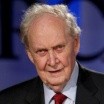
To get “borked” in politics means to be prevented from taking public office because of unwanted scrutiny, but its use is colored by whose side you’re on. The term came into use after the 1987 confirmation hearings for Judge ROBERT H. BORK, a nominee for the U.S. Supreme Court. Bork was a conservative justice from the Court of Appeals and a favorite of President Ronald Reagan. He was not a favorite of liberals or Democrats, who organized a public information campaign that led to contentious confirmation hearings. Bork and his defenders claimed unfair treatment, and when he was rejected for a seat on the high court they said he got “borked.” Nowadays “borking” can be looked at as a kind of character assassination — if you’re on the character’s team — or it can be looked at as the public’s right to know — if you don’t think the character deserves public office.
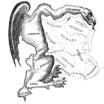
ELBRIDGE GERRY was a Massachusetts governor who’d fought for American independence and signed the Declaration of Independence and the Articles of Confederation. Before leaving office as governor he signed into law a bill that restructured the voting districts in Massachusetts to give his own party, the Democratic-Republicans, an edge in legislative elections. Although he didn’t sponsor the bill, the press attacked him for what they saw as blatant political opportunism. A visual representation of the new districts was said to look something like a salamander, and the press dubbed it “gerrymander.” The terminology stuck and has since been used as a noun and verb to describe similar political maneuvering.
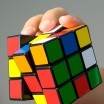
Originally called the Magic Cube, Hungarian designer ERNO RUBIK‘s creation has been one of the world’s most popular puzzles since it’s launch in the late 1970s. Now found in toy stores around the world, a Rubik’s Cube is a plastic cube made up of interlocking, smaller cubes. The six faces of the cube are comprised of nine colored cubes, and once they’re mixed up, it’s a tough trick to get them back together. Rubik developed the first working prototype in 1974, and mass production of the cube began a year later. Within a few years, the toy puzzle became a world-wide sensation. These days a Rubik’s Cube, in pop culture terms, is associated with all things nerdy, because only an ambitious brainiac can really solve the puzzle (even Rubik says it took him a month to figure out). At the same time, the Rubik’s Cube has an aesthetic value whose connection to post-modern art has made it one of the more memorable artifacts of the 20th century.
(Rubik’s ® Cube used by kind permission of Seven Towns Limited. www.rubiks.com.)

Global insurance and financial giant Lloyd’s of London takes its name from a coffee shop. Londoner EDWARD LLOYD ran a coffee house near the Thames as early as 1688, a popular gathering spot for seamen, merchants and investors. Lloyd catered to the business crowd with a variety of services, and his shop became a reliable source of information and reputable business deals. Over time the business end of things became more formalized, and long after Edward Lloyd died a society and corporate enterprise was formed (1769), taking the name New Lloyd’s Coffee House. Now called simply Lloyd’s of London, the firm is especially famous for insuring crazy things for outrageous sums, including Betty Grable‘s legs and London’s Tower Bridge (a moving bridge, it is insured as a ship).
A new Lloyd’s of London building was opened in 1986, with its famously busy Underwriting Room on the ground floor. “Designed by Richard Rogers, the unique building has all its services such as staircases, lifts, electrical power conduits and water pipes on the outside, leaving an open, flexible working space inside.” (Photo courtesy of Lloyd’s of London.)
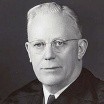
The Warren Commission was the panel named in 1963 by U.S. president Lyndon B. Johnson to investigate the assassination of John F. Kennedy. Officially called simply the President’s Commission on the Assassination of the President, it has always been known as the Warren Commission, after its chairman, Chief Justice EARL WARREN of the United States Supreme Court. When Warren was first asked by Johnson to chair the panel — about a week after the assassination — Warren expressed discomfort with the idea of serving on a presidential commission and turned down the job. Johnson persisted and convinced Warren that the nation’s future stability was at risk. Warren and six other men (Richard B. Russell, John Sherman Cooper, Hale Boggs,Gerald Ford, Allen W. Dulles and John J. McCloy) reviewed the events and published their findings in October of 1964. The Warren Report concluded that Lee Harvey Oswald acted alone when he killed Kennedy, and that Jack Ruby acted alone when he killed Oswald. After years of rumors and the release of new information, the U.S. House of Representatives convened a committee in 1979 to again review the events, concluding after two years that the Warren Commission got it right. Both panels, however, sealed evidence deemed sensitive, ensuring continued speculation.
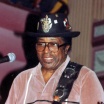
Although he was trained on violin as a child, BO DIDDLEYtaught himself to play the guitar and helped change rhythm & blues to rock ‘n’ roll. His flashy presence and distinctive sound made him a popular star right after his first songs, “Bo Diddley” and “I’m a Man,” hit the charts in 1955. Diddley’s guitar style was powerful and percussive, and the Bo Diddley beat has been described as “shave-and-a-haircut-six-bits.”
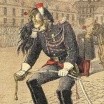
The Dreyfus Affair was a juicy political crisis in France at the end of the 19th century. The focus was the 1894 conviction for treason of ALFRED DREYFUS, a Jewish captain in the French army. When it was revealed that he had been convicted on false evidence, a bitter national controversy erupted that lasted for more than a decade. Besides revealing the depths of anti-Semitism in the French military, the crisis caused a great split between those who were loyal to the monarchy, the military and the church, and those who were republicans and socialists, resentful of the power of the clergy. These days the Dreyfus Affair is almost always mentioned in connection with author Emile Zola, whose famous open letter denouncing the French authorities began “J’Accuse” — I accuse.
(Image: Dégradation d’Alfred Dreyfus, or Alfred Dreyfus Stripped of His Rank, by Henri Meyer. Courtesy of Wikimedia Commons.)
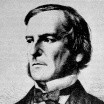
In the 19th century, English mathematician GEORGE BOOLEshowed that logic could be represented by algebraic equations. All that you ever learned about mathematical sets and their relationships, where they intersect and how their intersection forms a brand new set, and how that can then be represented by simple equations…all that is, in large part, thanks to George Boole. Using an Internet search engine, the sets are the words you choose for your search. To “narrow” your search (that is, get better results) you use Boolean terms such as AND, OR and NOT. To find documents about apple butter, for example, you would type in “apple AND butter,” and the search engine finds documents that include the words together, a single set. Searching for “apple OR butter” obviously yields a different result. A better description of how it works can be found here.
(Portrait of George Boole courtesty of Wikimedia Commons.)
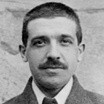
Sometimes called a “pyramid scheme,” a Ponzi scheme is a form of financial fraud named after one of its most famous practitioners, CARLO PONZI. An Italian immigrant living in Boston, Massachusetts, Ponzi was tried and convicted in 1920 for his role in conning thousands of investors (some say as many as 40,000) out of millions of dollars by promising huge returns and rewarding early investors with funds from new investors. Returns relied on a steady flow of fresh investment money, and the few early investors who did make money helped to feed the frenzy by boasting about their miraculous profits. All the fame and fortune brought the attentions of the federal government, who audited Ponzi’s company and discovered the scheme.
(Photo of Carlo Ponzi: U.S. Government, via Wikimedia Commons)
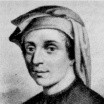
Also called the Fibonacci Series or the Fibonacci Sequence, the phrase refers to a series of numbers frequently found in nature. For example, the numbers of petals on a flower. Named after the 13th century mathematician LEONARDO FIBONACCI, it is a sequence where each number is equal to the sum of the preceding two (1, 1, 2, 3, 5, 8, 13, 21 …).(Portrait of Fibonacci courtesy of Wikimedia Commons. Artist unknown.)
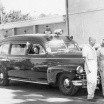
Have you ever noticed the pitch of a siren go from high to low as an ambulance roared past? That’s the Doppler Effect, named after the 19th century Austrian mathematician who noticed it, CHRISTIAN DOPPLER. It’s caused by the change in wavelength (and frequency) of a wave as the source of the wave moves past its observer. In sound, if the source and the receiver are moving toward each other, the pitch gets higher (and with light, the light will appear bluer). If the source and the receiver are moving away from each other, the pitch gets lower (with light, redder).(Photo of a 1948 Meteor Motor Car ambulance, under Creative Commons license via Wikipedia.)
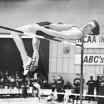
When DICK FOSBURY was a kid going out for track and field, he wasn’t comfortable doing the high jump the way he was taught. Instead he developed his own style, in which he approached the bar backwards, lying out flat as his body cleared the bar and kicking his feet over at the end. Although the style met with scorn, in 1968 Fosbury used it to win the gold medal at the Olympic Games in Mexico City. Since then, the Fosbury Flop has become a commonplace technique for performing the high jump.(Photo of Dick Fosbury at the NCAA Indoors, courtesy of the Dick Fosbury Track Camp.)
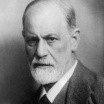
The father of psychoanalysis, SIGMUND FREUD, had a notion that the human mind had an unconscious part and a conscious part, and that sometimes our unconscious part could be revealed in dreams or hypnosis. Freud suggested that the unconscious part was really driving the mental bus, and a Freudian slip — more formally called a parapraxis — now means a misstatement that suggests a hidden meaning. For example: calling your wife by your mother’s name. Oops!
(Photo of Sigmund Freud by Max Halberstadt, first published in 1922, now via Wikimedia Commons.)
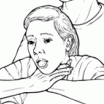
In the old days, the commonly accepted way to save a person from choking was to slap them firmly on the back. DR. HENRY HEIMLICH, a physician in Cincinnati, Ohio, discovered there wasn’t much research to back up this age-old remedy. In the mid-1970s Heimlich developed the Heimlich Maneuver, which involves standing behind the choking person, reaching around them and clasping your hands together just below the rib cage, then giving a quick upward thrust toward the diaphragm. The method has saved thousands of lives, and is sometimes recommended for victims of drowning, cardiac arrest and asthma.
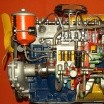
The diesel engine gets its name from RUDOLF DIESEL, a 19th century German who worked his entire life on thermal engineering — heat transference and how to use it, specifically in internal combustion engines. Diesel engines proved to be more efficient than coal-burning steam engines, and it wasn’t too long before coal was replaced by oil as the world’s most important fuel. Diesel engines run on fuel oil instead of gasoline, and ignition is caused the compression of the fuel-air mixture instead of by a spark. Diesel engines were more powerful than gasoline engines, but they were also heavier, lending themselves more to industrial generators, continuously operating pumps, ships, trucks, trains…and, later, some automobiles, notably the Mercedes-Benz.
(Photo of a Diesel engine by Luc Viatour, under the Creative Commons license.)
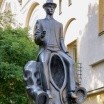
Beyond describing anything related to the writings of FRANZ KAFKA, the word is frequently used to describe an experience that is surreal and nightmarish: hopelessness mixed with helplessness. For example, when your Internet provider tells you the problem is in with your phone line, and the phone company tells you the problem has to do with your Internet provider.
(A 2003 monument to Franz Kafka in Prague, Czech Republic, by the sculptor Jaroslav Róna. Photo credit: Photo: Myrabella / Wikimedia Commons / CC-BY-SA-3.0.)
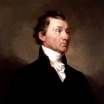
U.S. President JAMES MONROE bluntly said to European powers in 1823: “…the American continents, by the free and independent condition which they have assumed and maintain, are henceforth not to be considered as subjects for future colonization by any European powers.” In doing so, Monroe was staking claim to the continent of North America, a pretty bold move for a country that had only been around for a generation. Apparently, it worked.
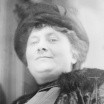
This is the educational model developed for children by Italian physician and educator MARIA MONTESSORI. Montessori first opened a school for children in Rome in 1907. She believed that children learned better if they were in an environment of self-education and self-realization. Her theories were put into practice and today there are Montessori schools across the globe.
(Photo of Maria Montessori: U.S. Library of Congress, Prints and Photographs Division. Bain News Service collection. Digital ID: gg.bain.14964)
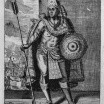
The Aztecs were at their peak in the first part of the 16th century. They had conquered most of what is now Central America and had built a grand capital city at what is now Mexico City. MONTEZUMA II was their leader, a warrior and a priest who, legend has it, thought the Spanish conqueror Cortes was the reincarnated form of the god Quetzalcoatl. That was a mistake, as it turns out, and the Spaniards conquered the Aztecs and changed world history. The “revenge” of Montezuma, it is popularly held, is visited upon foreign visitors to Mexico and Central America in the form of nausea and diarrhea (a reaction to the unfamiliar local bacteria).
(Image of Montezuma II courtesy of Wikimedia Commons.)
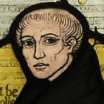
Applying Ockham’s Razor to a problem means to pare away unnecessary assumptions and principles, and to conclude that the simplest explanation is the best explanation. The term, also called the Law of Simplicity or the Law of Parsimony, is named for 14th century English philosopher WILLIAM OF OCKHAM.
(Photo of William of Ockham in a stained glass window at a church in Surrey, England, by Wikipedia user Moscarloop. Used under Creative Commons license.)
Although he wrote dozens of essays and books, author GEORGE ORWELL (the pen name of Eric Blair, 1903-1950) is perhaps best known for his novel of a future dystopia, 1984. To call something Orwellian is a reference to the practices of the repressive government in the novel, known as Big Brother. An example is an institutionalized system that alters official history to serve the political needs of those in power.
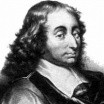
Named for 17th century mathematician BLAISE PASCAL, the founder of modern probability theory, this refers to hedging your bet when it comes to the existence of God. If you believe in God and he exists, it’s a win. If he doesn’t exist after all that believing, well, big deal. But if you don’t believe in God and he exists, you lose. So you’re better off, statistically speaking, believing that he exists.
(Image of Blaise Pascal courtesy of Wikimedia Commons.)
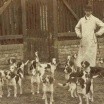
IVAN PAVLOV (1849-1936) was a Russian professor who studied physiology, a specialist on the nervous system. He demonstrated that the salivary glands of dogs could be stimulated even without the presence of food, if they’d been conditioned by some other form of external stimulus. Nowadays, a Pavlovian response, or “conditioned response,” describes a reaction that appears to be a result of inertia rather than reason.(Photo: A random pack of Beagles from an 1885 photograph, courtesy of Wikimedia Commons.)
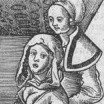
Influenced by Pavlov, French obstetrician FERNAND LAMAZE believed that pregnant women could be conditioned — both physically and psychologically — to make childbirth as painless as possible. He promoted his ideas in France, and after his death they were adopted by Lamaze International (founded in 1960), whose work transformed the childbirth process in the United States. The Lamaze Method, as it is sometimes called, involves breathing and relaxation techniques and advocates more participation by the father and other supporters, including trained childbirth professionals.
(Photo via Wikimedia Commons: Eucharius Rößlin, Der Swangern frawen vnd hebamme(n) roszgarte(n). Hagenau: Gran, um 1515. Not exactly a Lamaze birth, but still.)
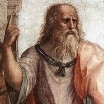
Yes, it’s named after ancient Greek philosopher PLATO, presumably because of his remarks in Symposium, a dialogue on love, in which he describes an ideal human love that exists in the abstract. Today the terms “platonic love” and “platonic relationship” have come to mean a friendship where romantic or sexual feelings are nonexistent or suppressed.
(Image: The School of Athens, 1509, fresco by Raffaello Sanzio, via Wikimedia Commons. Plato on the left, Aristotle on the right.)
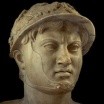
A Pyrrhic victory is one which is so costly as to threaten the winner’s future. After defeating the Romans at Asculum in 279 B.C., King PYRRHUS, aware of the great losses he had suffered, remarked to those congratulating him on the victory: “One more such victory and we are undone.” (The exact quote varies, but the meaning has endured.) Beyond that one battle, Pyrrhus throughout history has had the reputation of a warrior willing to sacrifice too much for victory. This is perhaps in large part due to Plutarch’s Lives, which casts Pyrrhus as a brave, hotheaded fool.
(Image: A bust of Pyrrhus from the Museo Archeologico Nazionale in Naples. Posted to Wikimedia Commons by user Catalaon.)
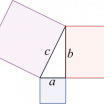
PYTHAGORAS himself probably never heard of the mathematical theorem that bears his name. It does appear, however, that the idea came from a school founded by this famous ancient Greek mathematician, sometime in the 6th century before Christ. Pythagoreans believed there was magic in numbers, and the theorem is pretty magical: the sum of the squares of the two legs of a right triangle is equal to the square of the hypotenuse. Every single time. The Pythagorean theorem’s equation is widely known: A squared plus B squared equals C squared.
(Illustration by Wikipedia user Michael Hardy, published under GNU free documentation license.)
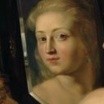
Generally, the word is a compliment, although perhaps of the left-hand variety. It refers to the work of Flemish painter PETER PAUL RUBENS (1577-1640), and is used to describe a robust, amply-proportioned woman. Why? Because many of Rubens’ paintings feature such characters, sometimes in ebullient splendor and sometimes in heavenly repose.
(Image: Venus at the Mirror, by Peter Paul Rubens, c. 1615.)
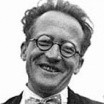
This refers to a vexing problem first put forth in 1935 by ERWIN SCHRÖDINGER. Put a cat inside a box with an apparatus involving a radioactive atom with a half-life of an hour. The atom has a 50-50 chance of decaying, which would result in the death of the cat. If it doesn’t decay, the cat lives. The only way to find out if the cat is alive or dead is to open the box after an hour. But until the cat is observed, it is simultaneously in a state of being maybe-alive and maybe-dead, sort of existing in two worlds at once. Once observed, the cat exists in only one. Don’t try this at home.
(Photo of Erwin Schrodinger c. 1933, photographer unknown, via Wikimedia Commons.)
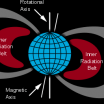
The Van Allen belts are two bands of radiation outside the earth’s atmosphere, in a region called the magnetosphere. Detected by the first American artificial satellites, the Explorerseries (1958), the “belts” are named for physicist and project director JAMES VAN ALLEN of the State University of Iowa. Van Allen’s interest in cosmic rays and his expertise in the miniaturization of electronic equipment meant the Explorersatellites contained devices made to detect radiation levels. Early counters went dead after detecting higher and higher levels of radioactive particles, and Allen’s team surmised the levels were simply too high for the detectors to handle. Allen designed a lead shield that only allowed a fraction of particles to be counted, and in late July of 1958 Explorer IV concluded there was high-energy radiation close to our atmosphere. A test in August 1958, in which the U.S. detonated an atomic bomb several hundred miles above the earth (Project Argus), proved the earth’s magnetic field causes highly charged protons and electrons to be trapped in two belts. Where the belts dip into the upper regions of the atmosphere — most often near the polar regions — the resulting effect is known as the aurora borealis (Northern Lights) and the aurora australialis (Southern Lights).
(Illustration of Van Allen radiation belt from NASA, via Wikimedia Commons.)
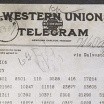
In 1917 most of Europe was in the thick of World War I, but the United States remained officially neutral. Although German aggression on the seas increased the likelihood that the U.S. would enter the war on the side of the British and French, Americans were reluctant to get involved in a war “over there.” Then the British intercepted a message from the German foreign minister, ARTHUR ZIMMERMANN, to the German ambassador for Mexico. Zimmermann’s telegram suggested an alliance between Mexico and Germany, promising German help in regaining territories in the southwestern United States. President Woodrow Wilson made the telegram public and changing public opinion propelled the U.S. to enter the war against Germany.
(Photo of the Zimmerman telegram courtesy of the U.S. National Archives, digital identifier 302025. Via Wikimedia Commons.)
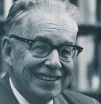
CHARLES F. RICHTER studied physics at Stanford in the 1920s, then became interested in seismology. He joined a Carnegie Institute and Caltech project studying earthquakes — the “Seismo Lab” — in 1927. Richter’s focus was on earthquakes in southern California, where he grew up and also home to Caltech. With mathematician Beno Gutenberg, Richter came up with a scale to compare the size of earthquakes. The scale uses whole numbers and decimals, with anything below 4.0 being barely felt by humans and 9.5 being the largest in recorded history (Chile, 1960). Massive destruction usually follows quakes of 7.0 or more magnitude, and there is no upper limit to the Richter Scale because there’s no upper limit to the magnitude of earthquakes. Think about that. Richter himself did not name his system the Richter Scale. That name was adopted by other seismologists and by the press. The United States Geological Survey no longer uses the Richter Scale to estimate earthquake magnitudes, preferring instead the Moment Magnitude Scale (MMS), developed in the late 1970s.