
Was it murder… or just natural causes?
In the 21st century, deaths rarely go unexplained. Today’s forensic experts with their DNA tests and high-powered microscopes are just too smart.
But in the past, yes! An unexplained death could have meant someone got away with murder. Take a look at some famous people who were Possibly Poisoned.

Speculating on the death of WOLFGANG AMADEUS MOZART has been a popular medical pastime for over 200 years. The genius composer was only 35 when he died in 1791 after a mysterious illness marked by fever and painful swelling. No autopsy was performed, and Mozart’s death was ascribed to “military fever.” It didn’t take long for rumors of poisoning to begin, many of them pointing the finger at Mozart’s rival composer (and former teacher) Antonio Salieri. Mozart’s widow Constanze even told friends that Mozart himself had had a premonition that he would be poisoned.Other causes have been suggested over the years, including scarlet fever, kidney stones and pneumonia. In 2000 a California professor of medicine, Dr. Faith Fitzgerald, proposed that Mozart may have died from rheumatic fever; the next year Dr. Jan. V. Hirschmann of Seattle wondered if he had died from trichinosis acquired by eating undercooked pork cutlets. In 2009, a Dutch study suggested strep throat.Alas, the truth will probably never be known. Mozart’s grave was later dug up for re-use (a common practice of the time) and the bones were scattered, which ruined any chance for modern chemical analysis of his remains.

Speculation has been just as heavy in the death of NAPOLEON BONAPARTE. The great French leader died in exile on the island of St. Helena in 1821 after a lingering decline and a final period of intense stomach pains.British military doctors on St. Helena performed an autopsy and found evidence of stomach cancer, which was given as the cause of his death. But the nature of Napoleon’s illness — and his long list of enemies — led his friends to suggest that he might have been the victim of slow poison.Scientists got into the act in the 1960s when newfangled tests showed unusually high levels of arsenic in Napoleon’s hair. Some historians called this proof of poisoning, while others blamed the arsenic on drinking water, hair cream, or even the wallpaper in his cottage. The 1978 book Assassination at St. Helena (by Ben Weider and Sten Forshufvud) accused Napoleon’s friend the Comte de Montholon of poisoning him slowly, first with arsenic and then with other medications. But in 2008, Italian scientists announced that they had used a small nuclear reactor (!) to test hair from Napoleon’s wife and son as well as hair samples from other eras of Napoleon’s life. Their conclusion: everyone had high arsenic levels in those days, up to 100 times higher than the typical level of today. Which leaves stomach cancer as original and still most likely explanation.
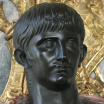
Never very lucky in love, the Roman emperor CLAUDIUS may well have been killed by his own scheming wife, Agrippina.Claudius and his son Britannicus (by an earlier wife) both died in 54 AD, just as Britannicus was about to come of age. Claudius died in October, and Britannicus two months later after a Saturnalia feast. Their deaths conveniently made way for Agrippina’s own son, Nero, to take the throne.Tradition offers two versions of the poisoning of Claudius. In one, he is fed a plate of poisoned mushrooms by Agrippina herself. In the second, she hires a conniving doctor to put a poisoned feather down the emperor’s throat. (The historian Tacitus mentions both versions, with the doctor’s feather finishing off Claudius after the mushrooms failed.)Historian Barbara Levick, in her 1990 biography of Claudius, says: “Murder cannot be proved… (but) the timeliness of Claudius’s death, and Britannicus’, affords circumstantial evidence that both were murdered… On balance it looks as if Claudius’s departure was brought about by Agrippina rather than due to her good luck.”

SRILA PRABHUPADA, founder of the Hari Krishna religious sect, died in 1977 after a lingering illness. 22 years later a Krishna follower, Nityananda Das, published a book with a stunning claim: that Prabhupada had been slowly poisoned by his own disciples.
Das offered tapes of Srila Prabhupada’s conversations with his disciples, in which the leader mentioned suspicions of being poisoned; according to Das, the tapes also reveal whispering disciples plotting more poisonings. The accusation caused a major ruckus within the sect, but Das’s charges were never proved.

ROBIN HOOD may be a fictional character, but that doesn’t mean there aren’t legends about his death.
The most popular story has him dying at Kirklees Priory in Yorkshire, after being bled by a nun (or cousin) who had joined forces with Robin’s enemies. But! Other versions of the tale have the woman administering poison rather than a bleeding. In the 1976 movie Robin and Marian, the nun is Maid Marian, who poisons a wounded Robin and then takes poison herself.
Nearly all versions have Robin, on his deathbed, firing one last arrow out of an open window and telling his pal Little John to bury him where the arrow lands.
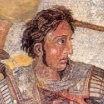
ALEXANDER THE GREAT was 33 when he died in Babylon after an illness of a several days. The historian Plutarch says that Alexander was attacked by fever after a day of drinking with friends, and that he lingered long enough before dying for his soldiers to file by him for a final farewell.
Rumors that Alexander was poisoned have carried down through the ages, perhaps because no firm cause of death was ever reported. Alexander’s body was oddly preserved and then carted to Egypt, further confusing the historical trail. As with Napoleon and Mozart, modern scientists have gotten into the act. University of Maryland disease expert David Oldach speculated in 1998 that Alexander died of typhoid fever.

One case in which modern science did make a difference was that of American president ZACHARY TAYLOR. The tough old soldier died suddenly in 1850 of what was described as gatroenteritis, or inflammation of the intestinal membranes. The reported cause was so mundane — Taylor had overindulged in cherries and iced milk on a scorching summer day — that some felt the president must really have been poisoned with arsenic instead.
Taylor’s descendants had the body exhumed in 1991, and samples of his hair and fingernails were taken to Oak Ridge National Laboratory in Tennessee. Scientists there determined that his arsenic levels were normal for his day, thus ruling out the poisoning theory.

Legendary blues guitarist ROBERT JOHNSON — the “Delta Blues King” — played and sang in Mississippi starting around 1930. One of his cohorts, Son House, is said to have spread the story that Johnson had been a lousy guitar player until he made a deal with the devil at the crossroads (a rural intersection somewhere in Mississippi). The devil tuned Johnson’s guitar at midnight (according to the legend) and thereafter Johnson became a supernaturally good player.
But Robert Johnson’s rising career was cut short in August of 1938, when he died suddenly and mysteriously at the age of 27. Had the devil come to get his due? Or had Johnson been stabbed or poisoned? In recent years, expert opinion seems to lean toward the theory that Johnson was poisoned by a jealous husband, but others say he died from pneumonia or complications resulting from syphilis. A researcher who uncovered Johnson’s death certificate in 1998 found that the cause of death was officially listed as a lack of medical attention, with no further explanation.
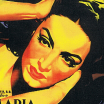
Popularly known as “La Doña,” Mexican movie star MARIA FELIX died on her 88th birthday, 6 April 2002. The given cause of death was a heart attack.While a nation of moviegoers mourned, her brother suddenly claimed that he had not been allowed to view the body and suspected that Maria Felix may have been poisoned. A drama erupted which lasted for four months, colored more than a little by the fact that Felix had left the bulk of her fortune to her 28 year-old assistant, Luis Martinez de Anda.Maria Felix was finally exhumed in August of 2002, and a week later authorities reported that she had died of natural causes. Case closed!

Feel-good author JANE AUSTEN, poisoned? Really?
So claimed crime author Lindsay Ashford in 2011. Ashford said she came to the conclusion after reading a letter written by Austen a few months before her death, in which she she told a friend she was “recovering my looks a little, which have been bad enough, black and white and every wrong colour.”
Ashford wrote in The Daily Mail that “What Jane described sounded very much like symptoms of arsenic, which causes skin-spotting if taken in small doses over a long time. Known as the ‘raindrop’ effect, it causes some patches of skin to go dark brown or black; other areas lose all pigment to go white.”
Ashford played down the possibility of murder, calling it “improbable” though not impossible. She said arsenic might have come in medicines Austen was taking, maybe a cure-all like Fowler’s Solution: “Composed of arsenic and potassium salt, it was soon widely prescribed for anything from rheumatism to syphilis.”
Ashford turned the idea into a novel, The Mysterious Death of Miss Austen. But she also admitted that the idea was purely speculation: “Letters and diaries cannot and will not tell us what really killed Jane Austen.”
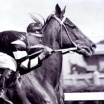
Did American gangsters poison the mighty Australian racehorse PHAR LAP?
Such was the rumor after Phar Lap’s sudden death at a California ranch in 1932. Phar Lap was an Australian national hero, having won an astonishing 36 of his 50 starts, when his owners shipped him to America for a lucrative racing tour. In his first race on March 20th, he beat America’s finest to a purse of $50,000 at the Agua Caliente racetrack in Mexico. Two weeks later he was dead, turning sick suddenly one morning and collapsing before sundown. An autopsy showed an inflamed stomach and intestines. “Poisoned feed!” whispered racing fans.
Was it the work of shady gamblers who wanted Phar Lap out of the way? Nothing ever was proved, but the “poisoning” became part of racing lore. A 2001 book by Geoff Armstrong and Peter Thompson offered a new theory: that Phar Lap was actually the victim of Duodenitis-Proximal jejunitis, an infection which sometimes afflicts horses who have traveled long distances.

Former Serbian president SLOBODAN MILOSEVIC died suddenly in 2006 in jail at The Hague, Netherlands, where he was being tried for war crimes.
An autopsy suggested a heart attack, but Milosevic’s supporters insisted he had been poisoned by authorities. (According to one report in the The Los Angeles Times, the day before he died Milosevic “told his legal adviser, Zdenko Tomanovic, that he suspected he was being poisoned” and “handwrote a letter to the Russian Foreign Ministry outlining his allegation.”) Others suggested that Milosevic was secretly taking an antibiotic called rifampicin to block heart medicine he was being given by doctors, perhaps in a bid to be win special treatment when his health didn’t improve. In that case Milosevic would have, in effect, poisoned himself.
In the end, a toxicology report found no evidence of rifampicin or other covert drugs in Milosevic’s system when he died. The cause of death remained, officially, a heart attack.

Robin Hood may not have been poisoned, but then he might not have been real, either. Same goes for King Arthur and good old Aesop.
Get the straight story in MAYBE REAL, MAYBE NOT >>