
From Lord Nelson in a Wine Cask to Lenin Under Glass
Why mince words? Here are some famous people whose bodies were preserved in highly unusual ways after their deaths.

Admiral HORATIO NELSON had one of naval history’s more famous deaths on the deck of HMS Victory in 1805 at Trafalgar, dying even as he defeated Napoleon‘s fleet.There was an odd epilogue: Nelson’s body was packed in a cask of brandy to preserve it for the long trip back to England. At a stopover in Gibralter the unfortunate admiral was transferred to a casket filled with distilled wine, further preserving his remains. Upon his body’s arrival in London, Nelson was given a hero’s funeral and entombment in St. Paul’s Cathedral.An old rumor has it that on the trip back from Trafalgar, thirsty sailors snuck drinks from the brandy cask carrying Nelson’s corpse. Nelson experts now consider this to be unlikely. But the rumor gave rise to a lively phrase for illicit drinking: “tapping the Admiral.”
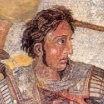
World-beater ALEXANDER THE GREAT died in distant Babylon in 323 B.C. The cause is not clear: he may have been poisoned, contracted a fever, or just had a bad reaction to a long bout of drinking.
After his death, Alexander’s body was placed in a gold casket and (according to legend) preserved in honey for the long trip home. As it turned out, though, his body went not to Macedon but to Egypt under the guidance of Alexander’s old friend Ptolemy. The body ended up in a tomb in Alexandria, the city Alexander himself founded, where it was visited by Julius Caesar and others. The casket was later melted down by a money-hungry pharoah, and some legends say the body was then displayed in a glass casket before finally disappearing entirely.
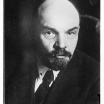
Soviet strongman V.I. LENIN became an icon after his death in 1924, helped along by an unusual effort to preserve his corpse.
For decades after his death, Russians lined up in all weather to view Lenin’s body on display in a glass container inside a special mausoleum in Red Square. A triumph of the embalmer’s art, the corpse was removed on a regular basis for the special top-secret treatments that kept it looking remarkably lifelike. When the Soviet Union fell apart in the 1990s, the fate of Lenin’s body became something of a puzzle for the new Russian leadership: a embarrassing symbol of the old regime, yet too famous to remove.
As it turned out, Lenin was too big a draw to get rid of. His body is still carefully preserved by experts, and still on display in his Red Square resting place.
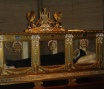
BERNADETTE SOUBIROUS, a French peasant girl, became suddenly world-famous when she told her family she had seen a vision of the Virgin Mary at Lourdes, France in 1858.
Bernadette became a nun as an adult. She died in 1879, and in the early 1900s the Catholic Church began the official proceedings to consider her for sainthood. Bernadette’s body was exhumed from its tomb three separate times in the course of research for her beatification. Each time, despite the passing decades, the corpse was reportedly “incorrupt,” showing few of the usual signs of decay.
Bernadette was, indeed, made a saint in 1933. Eventually a thin layer of wax was placed over her features, and her body is now kept in a gold-and-glass enclosure in the Church of St. Gildard in the convent in Nevers, France.
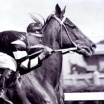
The racehorse PHAR LAP was so beloved in Australia that after his sudden death in 1932, his body was preserved by three separate museums.Phar Lap’s skeleton went to the National Museum in New Zealand, the country of his birth. His huge heart (nearly 50% larger than a typical horse’s) went on display at the Australian Institute of Anatomy in Canberra. His hide, however, was carefully mounted over a wooden frame, and displayed for many decades in the National Museum (later the Museum of Victoria) in Melbourne, Australia. There the horse became a local icon, visited by generations of schoolchildren.
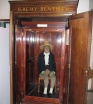
Philosopher JEREMY BENTHAM took a hand in his own nutty self-preservation.
Bentham’s will decreed that his body should be preserved as an “auto-icon,” dressed in one of his own black suits and “seated in a chair usually occupied by me when living.” Bentham died in 1832 and his orders were carried out — almost. Due to clumsy embalming, his head had to be replaced with a wax replica. To this day the dressed-up corpse is kept in a special cabinet at University College London.
According to the UCL website, campus lore holds that Bentham’s body “regularly attends meetings of the College Council… Its presence, it is claimed, is always recorded in the minutes with the words Jeremy Bentham – present but not voting.“
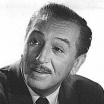
WALT DISNEY, the animator and creator of Mickey Mouse, died of an aggressive cancer in 1966. By the 1970s he had become the topic of a bizarre rumor: that his body had been cryogenically frozen and would be thawed out in the future when his cancer could be cured.
Some versions of the rumor said his body was actually stored at Disneyland, perhaps in a special underground cavern. The rumor was unfounded: in truth, Disney was simply cremated and his remains were buried in Glendale, California.
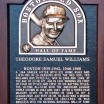
Baseball hero TED WILLIAMS was put into deep freeze after his death in July 2002.
Though Williams’s will called for the famous hitter to be cremated, his son John Henry Williams had the body whisked from Florida to Arizona, where it was cryonically frozen by the Alcor Life Extension Foundation. The move caused a public uproar as well as a family struggle: Williams’s daughter announced she would take legal action to reclaim his body. Later in 2002 she gave up her suit, and Williams’s body remains frozen in Arizona.
The 2009 book Frozen, by former Alcor executive Larry Johnson, said that Williams had been beheaded, with his head and body frozen in separate containers, and alleged that his body had been repeatedly mishandled. Williams’s head, according to Johnson, had been set on an empty can of Bumble Bee tuna to keep it off the bottom of its container, and an Alcor employee later battered the frozen head with a monkey wrench to separate it from the can.

Now let’s look at some people who weren’t preserved oddly, but who stepped awkwardly.